My 3 year old Samsung Galaxy S23 Ultra still works great. Despite its age, the Galaxy can handle my daily tasks with ease.
The screen still looks great, and Samsung’s regular software updates ensure I have access to most of the latest and greatest features.
I really have no reason to upgrade. But there’s one major hardware change that makes my phone feel outdated.
This is a change that no software update can fix: the switch to silicon-carbon batteries. This is the single biggest reason why I’m strongly considering an upgrade.
I tried out future batteries at CES 2026, and I’m ready to ditch my power bank
The solid-state battery is here, and it’s great
My Galaxy S23 Ultra is starting to show its age
I just never realized it
When I first used the Galaxy S23 Ultra in 2023, the 5,000 mAh battery life impressed me.
The phone can easily last a full day of moderate or heavy use, with some charge to spare. I don’t have to worry about running out of juice in the afternoon or evening.
Fast forward to today, and the same battery life no longer holds up. It felt like enough – enough to get me through the day.
Heavy daily use, with some wireless use of Android Auto or Google Maps navigation, was enough to drain the battery at night.
Although the battery was replaced several months ago, the decrease in operating time did not cause any damage.

Despite its flaws in its armor, I’m still happy to use the Galaxy S23 Ultra as my daily driver. That is, until I spent a week with the phone, packing a massive 7,300mAh cell.
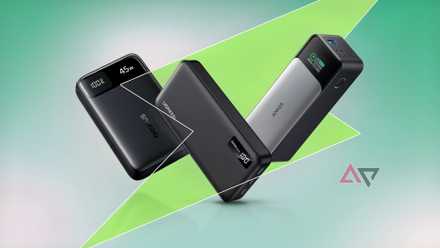
I always carry a power bank — but there’s one specification I ask for before purchasing
Slim and portable: the shape of the power bank is important
I’m not ready for this battery upgrade
A week with the OnePlus 15 changed everything
A friend lent me his OnePlus 15 to use for about a week. At first I didn’t pay much attention to this phone, because my Galaxy S23 Ultra worked fine.
But then, I decided to use it as a daily driver for a few days.
In practice, the OnePlus 15 has similar dimensions to the Galaxy S23 Ultra. But the battery life is on a different level.
While my aging Galaxy lasted all day with heavy use, the OnePlus 15 delivered two days of battery life on moderate use, or 1.5 days on very heavy use.
I didn’t expect Android phones to provide such good battery life.
If anything, using the OnePlus 15 will end my battery anxiety once and for all. I never worry about charging my phone before I go to bed or in the morning.
Even at 30%, I knew there was more than enough juice to last half a day.
OnePlus isn’t using a super efficient and power-hungry display or SoC in the OnePlus 15.
This is due to the difference in battery size, with this phone packing a large capacity cell of 7,300mAh vs. Galaxy S23 Ultra battery with a capacity of 5,000mAh.
So how did OnePlus manage to fit a battery nearly twice as large as the Galaxy S23 Ultra’s 5,000 mAh cell into a phone of the same size? The answer is silicon-carbon battery technology.

I won’t get into the technical details, but silicon-carbon batteries have greater energy density than traditional lithium-ion cells in the same physical space.
This means a higher capacity battery can fit in the same form factor.
You might think a bigger battery means a longer charging time. But that’s not the case with the OnePlus 15.
Thanks to 80W wired charging, the phone recharges its massive 7,300mAh battery in about the same time it takes my Galaxy S23 Ultra to recharge its much smaller 5,000mAh cell.
In other words, the larger battery on the OnePlus 15 doesn’t come with a charging time penalty.
This is another reason why the OnePlus 15 never raises battery concerns.
Regardless of how much charge is left in the tank, I know a few minutes on the charger will be enough to last me all day.
A quick 15-minute charge while I’m getting ready in the morning is enough to get me through a full work day.
For comparison, my Galaxy S23 Ultra maxes out at 45W wired charging. Honestly, it hasn’t felt slow in years.
Once I got used to the OnePlus 15’s super-fast charging speeds, it felt like a major downgrade.
This is an improvement I can’t ignore

Even after three years of use, I have few complaints about the Galaxy S23 Ultra. I was very happy using it as my daily driver — until I tried the OnePlus 15.
More than just faster performance or a brighter display, this made me realize that battery technology has quietly taken a giant leap forward.
The silicon-carbon battery has a much larger capacity than the one inside my Galaxy S23 Ultra, while charging very quickly, all without making the phone any bulkier.
After using it, I realized that there was no way a battery replacement or software update would bridge the gap.
And as I spend more and more time on my phone, battery life has become one of the features I value most.
That’s why this hardware shift finally prompted me to upgrade. The increase in battery life by a few days is too good a leap to ignore.


8.5/10
- SoC
-
Qualcomm Snapdragon 8 Elite Gen 5
- RAM
-
12GB/16GB
- Storage
-
256GB / 512GB
- Battery
-
7,300mAh
The OnePlus 15 brings a massive 7,300mAh battery to the flagship phone table, which when paired with the Qualcomm Snapdragon 8 Elite Gen 5 processor delivers spectacular battery life. Despite the battery size, the phone has a modern design and modest weight, and also features OnePlus’ new DetailMax Engine for the camera.
PakarPBN
A Private Blog Network (PBN) is a collection of websites that are controlled by a single individual or organization and used primarily to build backlinks to a “money site” in order to influence its ranking in search engines such as Google. The core idea behind a PBN is based on the importance of backlinks in Google’s ranking algorithm. Since Google views backlinks as signals of authority and trust, some website owners attempt to artificially create these signals through a controlled network of sites.
In a typical PBN setup, the owner acquires expired or aged domains that already have existing authority, backlinks, and history. These domains are rebuilt with new content and hosted separately, often using different IP addresses, hosting providers, themes, and ownership details to make them appear unrelated. Within the content published on these sites, links are strategically placed that point to the main website the owner wants to rank higher. By doing this, the owner attempts to pass link equity (also known as “link juice”) from the PBN sites to the target website.
The purpose of a PBN is to give the impression that the target website is naturally earning links from multiple independent sources. If done effectively, this can temporarily improve keyword rankings, increase organic visibility, and drive more traffic from search results.